

Home Page

LATEST FEATURES

Aerial view of Chaukhandi Stupa in the Archaeological Remains of Sarnath, Archaeological Survey of India © Abha Narain Lambah Associates

Sarnath: Ancient Buddhist Site

During the World Heritage Committee Session over the summer, meeting in Busan, South Korea, the ancient Buddhist site of Sarnath was one of the group of 25 new sites inscribed on the list. The complex contains the architectural and archaeological remains of Sarnath, the sacred site where the Buddha is believed to have delivered his first sermon in the 6th century BC and met his earliest…

The Forbidden City and The World

Built and used as the official imperial residence for China’s emperors during both the Ming (1368-1644) and Qing (1644-1911) dynasties, the Imperial Palace, or the Forbidden City, was strictly off-limits to all but the emperor, his family, and thousands of his servants. Made up of more than 90 architectural complexes, the Imperial Palace comprised about 980 buildings…


Detail from Fighting Tiger, Yinzhen’s Amusements, Qing dynasty, Kangxi period (1662-1722), album leaf, ink and colour on silk, The Palace Museum The Palace Museum © The Palace Museum

Pan Ngales, temple hanging (tabing), Churning of the Milky Ocean, from the ‘Adiparwa’ (Book of the Beginning), 1925-50, Kamasan, Klungkung, Bali, sized factory cotton, natural pigments and cinnabar, 127.5 x 160 cm (including frame), gift of Michael Abbott AO QC and Sue Craftert through the Art Gallery of South Australia Foundation. Donated through the Australian Government's Cultural Gifts Program. All images courtesy the Art Gallery of South Australia, Adelaide

Indonesian Textiles: Bali and Lombok

n Australia, the remarkable story of the artistic exchange that occurred between two very different Indonesian societies, Hindu Bali and Muslim Lombok, is being told at the Art Gallery of South Australia. The exhibition highlights the diversity of art, including the woven, embroidered, painted and tie-dyed textiles created by the Sasak people of Lombok and the Balinese as an expression of their spiritual beliefs,…


Buddhist Painting from Nara

Buddhist paintings from Nara, known in Japanese as Nanto butsuga, represent a foundational tradition of sacred Japanese art. Rooted in the cosmopolitan Tenpyo style of the Nara period (710-794), these works feature rich iconography, detailed mandalas, and classical Buddhist imagery preserved across Nara’s ancient temples and at the Nara National Museum. A selection of these works on loan from the Museum of Fine Arts in Boston is currently on display at …

Hayatake Torakichi and his troupe performing their act Edo Flowers and Falling Leaves (1857) by Utagawa Kuniyoshi (1797-1861), Edo period, polychrome woodblock print on paper, J-Y & G Borg Collection

Asian and Islamic Works of Art

AUCTIONS
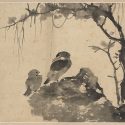
The latest shows from around the world

GALLERY SHOWS
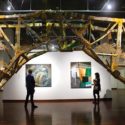
  • THE MAGIC OF EXPLORATION

    THE MAGIC OF EXPLORATION

    From biennials and triennials to art summits, fairs, and cultural tours  – countless art events now dot the globe and compete for attention and …Read More »
OBJECT OF THE MONTH
FROM THE ARCHIVE
  • Wang Keping

    Wang Keping

    The Rodin Museum invited Wang Keping to take over the sculpture garden as his studio during May and early June. The project is a …Read More »
TRAVEL FEATURES